Walk into a rowhome anywhere near Drexel Hill — say, along Burmont Road or over toward Drexel Hill’s Springfield Road corridor — and I can tell you what I’m going to find before I even pull the access panel. The original ductwork was squeezed in wherever it fit, not wherever the airflow needed to go. That’s the reality of Custom Ductwork work in these homes, and it’s the reason so many homeowners here are still sweating through July despite paying for a brand-new system. I’m Yan, and this is what I see every day.
“The equipment is fine. The problem is the ductwork it’s pushing air through — and in most Drexel Hill rowhomes, that ductwork was designed by whoever could squeeze a run through a three-inch gap.”
What I Notice in the First Five Minutes
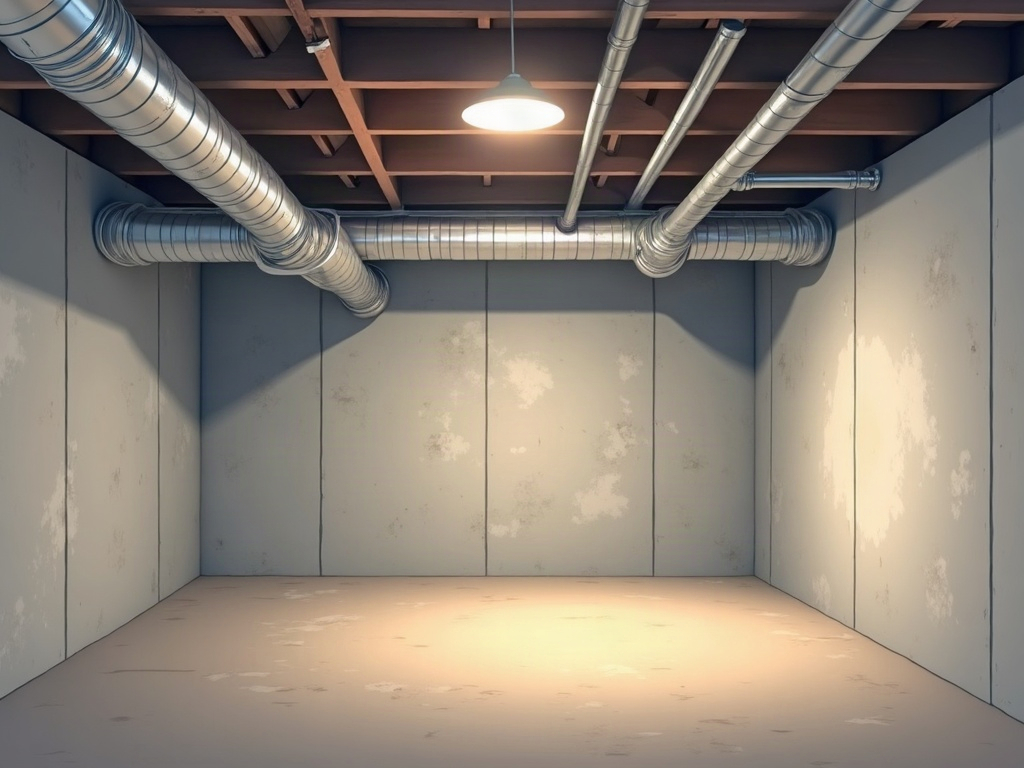
Rowhomes are long, narrow, and stacked — three stories of living space sitting on a 16-foot-wide footprint, with shared walls that limit where duct runs can go. The first thing I check is trunk line sizing. In a standard suburban split-level, a contractor has room to run properly sized ductwork through an open basement ceiling. In a rowhome, that same contractor often reduces the trunk diameter to thread it past an obstacle — and that single compromise kills airflow to everything downstream.
Next I check the register placement. Older homes in Drexel Hill frequently have registers installed for original radiator or baseboard layouts — positions that made sense for radiant heat but are nearly useless for forced air. Cold air drops, hot air rises, and if your supply registers are at knee height on interior walls, your upstairs bedrooms stay ten degrees warmer than the ground floor all summer long. Sound familiar? There’s a detailed breakdown of why your second floor never cools down if you want to dig into the physics.
Warning Signs Your Ductwork Is the Real Problem

- Rooms that are always too hot or too cold regardless of thermostat setting — especially the top floor or a rear addition
- High humidity indoors even with the AC running, which in southeastern Pennsylvania can also mean air quality concerns worth investigating
- Dust buildup near registers that reappears days after cleaning — a sign of leaky joints or disconnected sections
- Utility bills that spiked after a system replacement, meaning the new equipment is working harder than it should to compensate for undersized runs
- Whistling or pressure noise from vents, especially under load — velocity is too high because the duct is too small
- An older home with original ductwork — if the ducts date from the 1970s or earlier, assume they were not sized for modern high-efficiency equipment
What Custom Ductwork Actually Costs — and Why It Pays
Homeowners in Ardmore, Bryn Mawr, and Media often ask me straight: “How much is this going to cost me?” Fair question. A partial duct modification — resizing a trunk line, adding a properly placed return, rebalancing dampers — typically runs $800 to $2,500 depending on access and scope. A full custom duct system for a rowhome or older masonry property ranges $3,500 to $8,000+, with complexity and materials driving most of the variation. That sounds like a lot until you compare it to what you’re losing: an oversized system short-cycling and wearing out in eight years instead of fifteen, or monthly energy bills running $60–$100 higher than they should.
If the duct situation in your home is severe enough that routing runs is genuinely impractical, a ductless alternative may be worth considering — I’ve covered the real benefits of ductless mini-splits separately so you can compare. And if you’re working with an older masonry home in Chester County or along the Main Line, there’s also a practical guide on retrofitting central air into old masonry homes that’s worth reading before you commit to anything.
The ENERGY STAR program outlines how leaky and undersized ducts waste 20–30% of conditioned air in a typical home — and in a rowhome with compromised runs, that number can be even higher. Getting the ductwork right is not an upgrade. It’s the baseline for any system to perform as advertised.
Why a Local, Experienced Contractor Makes the Difference
I’ve seen what happens when a national chain sends a crew that’s never worked in a Drexel Hill rowhome. They install what’s easiest, not what’s right, and the homeowner calls us six months later wondering why the new system isn’t performing. At Air Pro HVAC, we’ve been working in these specific neighborhoods — Drexel Hill, Bala Cynwyd, West Chester, Malvern, Garnet Valley, Radnor — for over 20 years. We know how these homes are built, where the chases run, and how to design a duct layout that actually delivers balanced airflow to every room.
If you’re tired of guessing and want someone to give you a straight answer, call Air Pro HVAC at (215) 240-8466. We’ll come out, assess what’s actually happening, and tell you honestly what needs to be done — no pressure, no upsell, just a clear plan you can feel good about.
Some content on this site is AI-assisted and may not reflect exact current details — please verify with Air Pro HVAC at (215) 240-8466. Learn more.