
It never fails. The hottest day of a Philadelphia July arrives, the kids are home, an elderly parent is visiting, and the AC just stops. Or the furnace kicks on for the first time in October and that unsettling smell of burning dust fills the house — and you spend the next hour wondering whether it’s just dust or something worse. If you’ve been through that scramble before, you already know: HVAC Tune Up and Maintenance isn’t optional maintenance you get around to eventually. It’s the one thing that keeps your home running reliably all season long — and keeps you from writing a check to an emergency repair crew on a Sunday night. At Air Pro HVAC, we’ve been taking care of homeowners across Drexel Hill, Ardmore, Bryn Mawr, West Chester, and the rest of Delaware and Chester County long enough to know what these homes need — and what they don’t. We show up on time, we tell you exactly what we find, and we don’t invent problems to sell you parts you don’t need.
Your System Should Work When You Need It — Not Just Most of the Time
Most HVAC breakdowns are predictable. A dirty coil that hasn’t been cleaned in two seasons. A filter that’s been ignored long enough to choke the airflow. A refrigerant charge that’s been quietly drifting low. Connections that vibrated loose over the winter. None of these failures happen overnight — they build slowly, and a thorough tune-up catches them before they leave you scrambling. The difference between an HVAC service and a repair is simple: a tune-up is what prevents the repair. And prevention is almost always cheaper, faster, and less stressful than an emergency call.
Whether you own a 1960s split-level in Drexel Hill with original ductwork you’ve always wondered about, a stone colonial in Radnor where heating and cooling have never been quite even, or a rental property in Chester where tenant comfort is your legal and ethical responsibility — regular maintenance is the foundation everything else is built on. Learn more about what professional HVAC maintenance actually covers at this overview of HVAC tune-up and maintenance standards.
What Our HVAC Tune-Up Includes
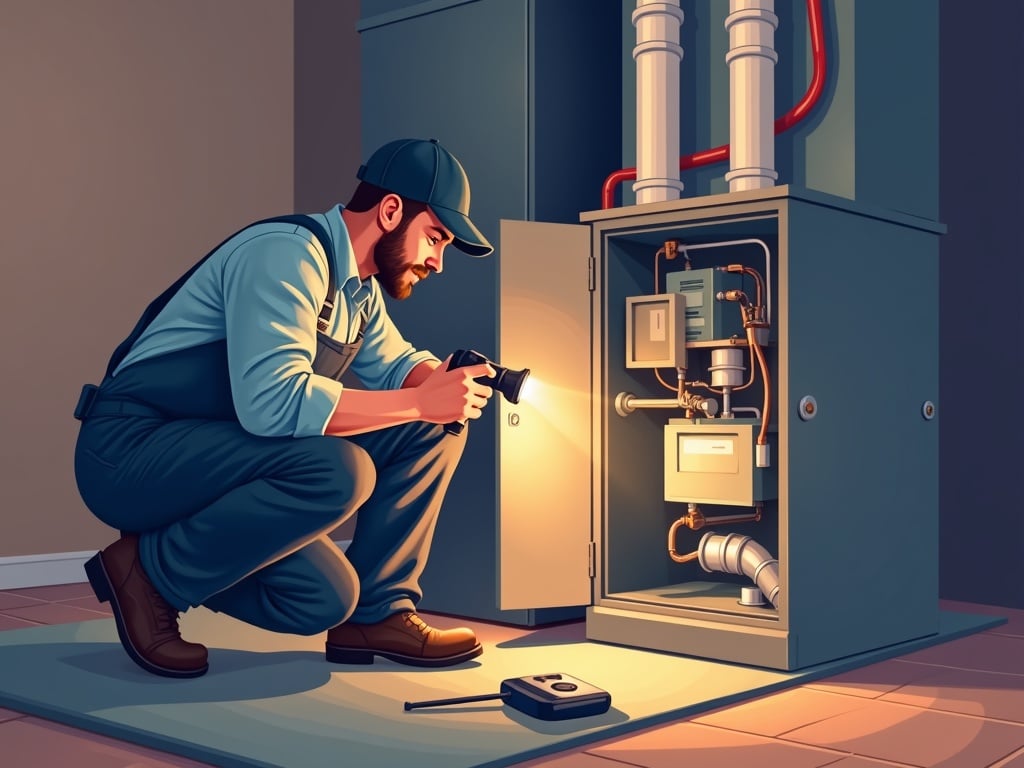
People ask us all the time: what does a furnace tune-up include, really? Fair question — especially if you’ve paid for one before and weren’t sure what you got. Here’s exactly what we do, every time, with no shortcuts.
Cooling System (AC) Tune-Up
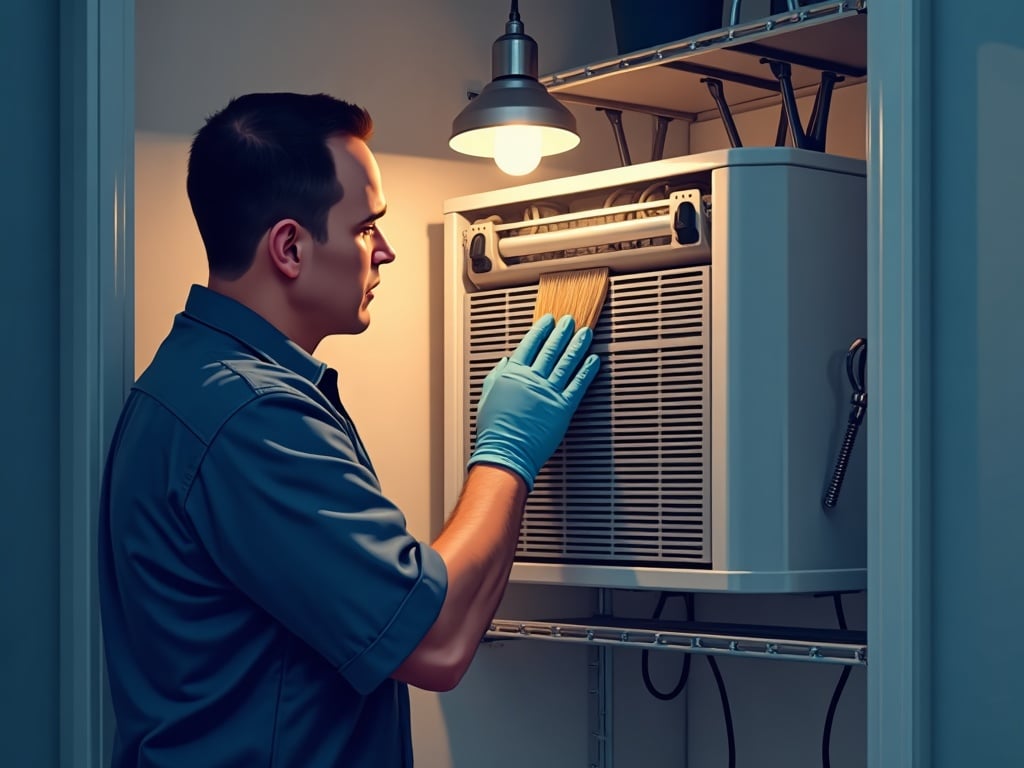
- Coil cleaning — both the indoor evaporator coil and the outdoor condenser. A dirty coil is the single most common reason an AC loses efficiency and eventually fails early.
- Refrigerant check — we verify the charge is correct. If we’re seeing ice buildup on the line set outside, that’s a red flag we address directly.
- Condensate drain inspection and flush — a clogged drain line causes water damage and mold. We clear it before it becomes a problem.
- Electrical connections and capacitors — loose or corroded connections and a weak capacitor are top causes of sudden breakdowns on hot days.
- Airflow and duct check — we assess static pressure, look for signs of undersized or undersupported ductwork, and note any rooms that are consistently uncomfortable.
- Thermostat calibration — including remote thermostat sensor checks if you have zone sensors in specific rooms.
- Filter inspection and replacement guidance — we’ll tell you honestly what interval makes sense for your home and household.
Heating System (Furnace / Heat Pump) Tune-Up
- Heat exchanger inspection — this is non-negotiable. A cracked heat exchanger is a carbon monoxide risk. We check it every time, and we explain what we find in plain language.
- Burner and ignition inspection — dirty burners and ignition failures are the most common causes of a no-heat call in January.
- Flue and venting inspection — ensuring combustion gases are exhausting properly is a safety issue, not a upsell.
- Blower motor and belt check — a worn blower motor is noisy, inefficient, and heading toward failure.
- Gas pressure and combustion analysis — we verify the system is burning cleanly and efficiently.
- Heat pump auxiliary and emergency heat check — if your system has aux heat or em heat settings, we confirm they’re operating correctly and explain the difference between them so you’re not left guessing.
- Full safety inspection — including combustion air requirements and any concerns specific to older homes.
Ductwork and Airflow Assessment
Uneven heating and cooling in a house is one of the most common complaints we hear — and one of the most misdiagnosed. Before anyone tells you that you need a new system, someone should actually look at your ductwork. Banging ducts, high static pressure symptoms, undersized return air vents, and poor duct layout in older homes are fixable problems that don’t require replacing equipment. We assess what you have and tell you honestly whether it’s adequate, improvable, or a real limitation.
Why This Matters for Greater Philadelphia Homes Specifically
Greater Philadelphia homes — especially in communities like Villanova, Bala Cynwyd, Media, and Malvern — come with their own set of HVAC challenges. Many of the homes we service are 50 to 100 years old. Stone construction resists heat gain in summer but holds humidity, which means condensation on windows during the summer and indoor air quality concerns that a standard tune-up checklist from a national chain won’t address. HVAC in a 1960s home often means original ductwork that was sized for a different era’s equipment. HVAC in a stone home means careful attention to insulation and airflow gaps that most techs miss entirely.
Humidity is a real issue in this region. Many homeowners in Bryn Mawr and Garnet Valley have asked us whether a dehumidifier or their AC is the better tool for managing indoor moisture — the honest answer is usually both, working together. A well-maintained, properly charged AC system does most of the dehumidification work; a standalone dehumidifier handles what’s left. When the system isn’t maintained, humidity wins.
Landlords and property managers in Chester, Drexel Hill, and across Delaware County face a different pressure: tenant complaints don’t wait for a convenient time, and deferred maintenance becomes a liability. A regular HVAC maintenance plan creates a documented service history that protects you legally and financially — including when it comes time to document HVAC service history for a home sale, insurance claim, or tax purposes. Speaking of which: if you own rental property, a qualified tax advisor can confirm whether regular HVAC maintenance and repairs may be deductible as a business expense.
“They showed up when they said they would, told me exactly what they found, and didn’t try to sell me a new unit. Turned out it was a dirty coil and a weak capacitor — fixed in an hour. That’s all I wanted: someone honest.”
— Homeowner in Ardmore, PA
How We Work: What to Expect From an HVAC Service Call
We know you’ve probably dealt with at least one contractor who was hard to reach, showed up late, or left you with more questions than answers. We built our process specifically to not be that experience. Here’s what happens when you book a tune-up with Air Pro HVAC:
- You call or book online. A real person answers. We give you a real appointment window — not a four-hour holding pattern.
- We show up on time. Our technician arrives when we said they would, in a marked vehicle, with proper identification. No surprises.
- We do the full inspection first. Before we recommend anything, we complete the diagnostic. We don’t walk in with a sales script.
- We explain what we found — in plain language. If something needs attention, we tell you what it is, why it matters, and what it costs to address. If it doesn’t need work yet, we tell you that too.
- We get your approval before we do any work beyond the tune-up. No surprises on the invoice.
- We document the service. You get a written record of what we inspected, what we found, and what was done. Keep that — it’s your HVAC service history and it has real value.
A Note on Energy Savings and Available Incentives
A well-maintained HVAC system runs more efficiently — and that efficiency shows up on your energy bills. Homeowners in King of Prussia and Malvern who invest in regular tune-ups and, when the time comes, higher-efficiency equipment may also be eligible for an HVAC energy tax credit. Pennsylvania utility rebates have also been available for qualifying upgrades. We don’t do the tax filing, but we’ll make sure you have the documentation you need to ask your accountant the right questions. The connection between HVAC and home energy efficiency is direct: a tuned, clean, properly charged system uses less electricity to do the same job.
If you’re weighing whether to tune up an aging system or replace it, we can help you think through that honestly. We’re not here to push a replacement you don’t need — but we’ll also tell you plainly when continued repairs stop making financial sense. If replacement is the right call, explore our HVAC replacement services and our full range of heating and cooling solutions for homes across the Philadelphia suburbs.
Serving Delaware County, Chester County, and the Main Line
We are a local, family-owned business — not a national franchise with a call center in another state. Our technicians live and work in the same communities you do: Drexel Hill, Ardmore, King of Prussia, Chester, Media, West Chester, Garnet Valley, Malvern, Radnor, Villanova, Bryn Mawr, Bala Cynwyd, and the surrounding Philadelphia, PA area. We know the housing stock here. We know the challenges. And we’re accountable to our neighbors in a way that a company without roots here simply isn’t.
If you’re a homeowner, a landlord, or a property manager and you want a system that runs reliably all season — backed by honest people who show up when they say they will — we’d like to earn your business. Contact us to schedule your tune-up or ask us anything. We’re straightforward people and we’re glad to help.
Serving Drexel Hill, Ardmore, King of Prussia, Chester, Media, West Chester, Garnet Valley, Malvern, Radnor, Villanova, Bryn Mawr, Bala Cynwyd, and communities throughout Delaware and Chester County, Pennsylvania.