
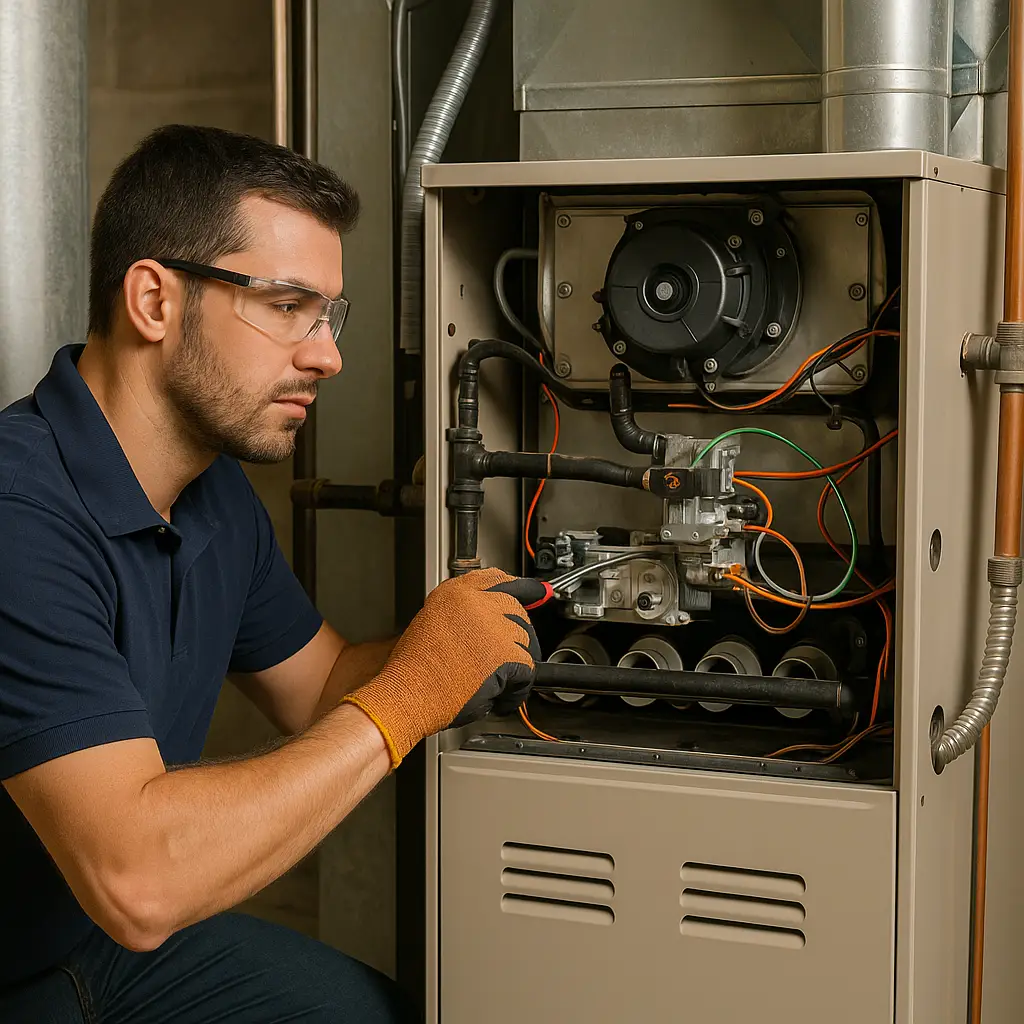
If there’s one thing experience teaches every HVAC Technician, it’s this:
Heating systems don’t fail by surprise.
They fail by neglect.
At Air Pro HVAC, we prepare hundreds of homes across Philadelphia, PA every fall.
And every time we walk into a home with no heat, the signs were there — they were just ignored.
So before winter sets in, here’s your inside look at what our heating professionals actually check (and how you can do your part to make sure you never spend a night without heat).
1. Start with the Filter — It’s Small but Mighty
A dirty air filter is the number one cause of system inefficiency.
It’s also the easiest problem to prevent.
When your filter clogs, your system can’t breathe.
That means restricted airflow, overheated components, and higher utility bills.
In some cases, a neglected filter can even cause the heat exchanger to crack — and that’s a safety hazard no homeowner wants.
Pro Tip: Change your filter every 1–3 months depending on your usage and local dust levels.
If you use high-efficiency filters, check them monthly — they trap more, which means they fill up faster.
2. Inspect Your Thermostat (and Don’t Assume It’s Fine)
You’d be surprised how many “furnace failures” are actually thermostat malfunctions.
If your system won’t start, or cycles too often, it might not be your furnace at all.
Modern smart thermostats can drift out of calibration over time.
During a professional HVAC Technician, our technicians test and recalibrate thermostats to ensure accurate readings.
Homeowner Tip:
Try lowering and raising your temperature setting a few degrees.
If the system doesn’t respond immediately, your thermostat may need adjustment — or fresh batteries.
3. Check the Burners and Flame Sensor
Inside your furnace, the burners mix gas with air to create the flame that heats your home.
If those burners are dirty or misaligned, combustion becomes inefficient — and dangerous.
Soot buildup, delayed ignition, and incomplete burning can all lead to carbon monoxide production.
That’s why every HVAC Technician includes burner inspection, cleaning, and testing for safe ignition.
We also check the flame sensor — a small but crucial part that ensures your furnace shuts off safely if the flame goes out.
If your furnace clicks repeatedly without lighting, the flame sensor is a likely culprit.
4. Test Carbon Monoxide Detectors
Speaking of carbon monoxide — check your detectors.
Every home with gas heat should have at least one on each floor.
CO is invisible and odorless, but exposure can be deadly.
We test for leaks at every service visit, but homeowners should still test their detectors monthly using the “test” button.
Replace batteries every six months, and replace the entire detector every 5–7 years.
It’s one of the simplest ways to protect your family during the heating season.
5. Listen for Unusual Sounds
No furnace should sound like a drumline.
Rattling, banging, whining, or grinding are all early warning signs.
Each sound tells a different story:
- Rattling could mean loose panels or ductwork.
- Banging might signal delayed ignition or expanding metal ducts.
- Whining often points to a worn motor bearing or fan belt.
- Grinding usually means serious mechanical wear — time to call for service.
When you hear something new, don’t ignore it.
Those noises are your system’s way of asking for help.
6. Check the Exhaust and Intake Pipes
Modern high-efficiency furnaces use PVC piping to bring in fresh air and vent exhaust gases.
Over time, debris, ice, or even small animals can clog those pipes.
That blockage causes poor combustion, reduced efficiency, or worse — system shutdown.
A professional HVAC Technician includes clearing and verifying all venting pathways.
But homeowners can help, too — especially after storms.
If you see frost or leaves blocking the pipe openings outside, gently clear them.
Your furnace will thank you — and so will your gas bill.
7. Schedule a Professional Heating Inspection
This one’s non-negotiable.
No amount of DIY replaces a trained technician’s eye for detail.
Our technicians don’t just check what’s obvious — we measure temperature rise, pressure differentials, gas valve operation, and ignition timing.
These are the diagnostics that catch small problems before they become big repairs.
Think of it like a yearly checkup — not because something’s wrong, but because staying healthy is cheaper than getting sick.
“Homeowners don’t need to know every part of their furnace,” says one of our senior techs. “They just need to know who’s checking it properly.”
That’s what real maintenance looks like — preventing problems, not reacting to them.
How Regular Maintenance Saves You Money
Every year, we meet homeowners who wait until something breaks before calling for service.
And while we’re always ready to help, repairs during peak season cost more — both in parts and energy use.
By scheduling pre-season HVAC Technician, you’re locking in three major savings:
- Lower energy bills — up to 25% less energy use.
- Fewer breakdowns — up to 90% of emergency repairs are preventable.
- Longer lifespan — routine service adds 5–10 years to most systems.
That’s not theory — that’s field data from the systems we’ve serviced for over a decade in Philadelphia, PA.
Why Comfort Is About More Than Heat
A well-maintained furnace doesn’t just keep your home warm; it keeps it balanced.
When airflow is consistent and humidity is controlled, the entire home feels better.
Uneven heat, cold spots, and dry air are all signs that your system needs attention — not replacement.
Proper maintenance restores balance, comfort, and quiet performance that lasts through the season.
Your Partner in Reliable Heating
At Air Pro HVAC, we take pride in doing things right — not fast.
We document every reading, every adjustment, and every recommendation, so you always know the “why” behind our work.
Because the best service isn’t about selling parts; it’s about protecting homes.
It’s what we’ve built our reputation on in Philadelphia, PA — one reliable system at a time.
So before winter hits full force, take a page from the pros.
Follow this checklist, and then let our experts handle the rest.
The Bottom Line
A reliable furnace doesn’t happen by accident — it’s the result of consistent care.
The kind of care a seasoned HVAC Technician brings to every job.
Don’t wait for your heat to fail on the coldest night of the year.
Call Air Pro HVAC today at (215) 240-8466 to schedule your pre-winter inspection and tune-up.
Because when your system’s prepared, so are you — for every cold morning ahead.